From Aurora to Bradford: Memories, Main Streets, and the Places That Shape Us
There’s something about growing up in the 80s and 90s in Ontario that people from this area just get.
Before endless subdivisions, before every plaza looked identical, before everything became algorithmically polished, towns had personality. They had staples. Places everyone knew. Places with stories attached to them. Places you maybe weren’t even “supposed” to go into yet, but you still knew exactly what they were.
For Shannon Murree, growing up in Aurora meant Bradford was always part of the orbit.
“Back then, Bradford felt like one of those towns that sat right in the middle of everything,” Shannon says. “You passed through it, hung out there, knew people there, worked there, dated there, ate there. It was woven into life.”
And yes, there’s nostalgia attached to that.
“I remember knowing the owners of Pizzaville. I dated one of their staff. Some of my closest memories and friendships were tied to those years. Even hearing the old slogan start with ‘It was a rainy day…’ instantly takes me back.”
That’s the thing about towns like Bradford. People don’t just remember addresses. They remember feelings.
The Friday nights.
The plazas.
The music.
The first jobs.
The people behind the counters.
The restaurants everyone knew.
And then there was the Village Inn.
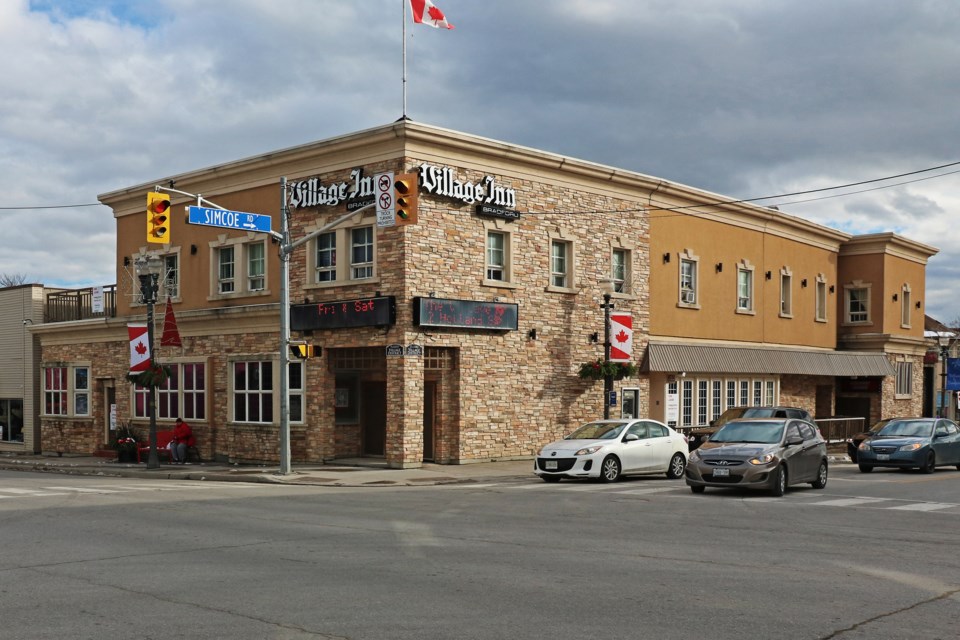
If you grew up anywhere near Bradford, you knew of it.
“To be fair, I never actually went in,” Shannon laughs. “And back then, it definitely had a reputation.”
But that reputation is part of local history too.
For decades, the Village Inn was one of those unmistakable landmarks that became embedded into the identity of the town itself. Whether people loved it, avoided it, danced there, worked there, or just drove past it a thousand times, everyone knew exactly what it was.
That’s why its potential transformation into something entirely new feels symbolic of what Bradford itself has become.
Because Bradford today is not the Bradford of the 1990s.
Even the name evolution says something. What many people simply called “Bradford” growing up is now more commonly referred to as BWG, short for Bradford West Gwillimbury. On paper, it reflects municipal growth and regional identity. But culturally, it also represents the transition from a smaller agricultural town into a broader, rapidly evolving municipality balancing development, infrastructure, heritage, and population growth all at once.
For longtime residents and those who grew up nearby, “Bradford” still carries a certain emotional shorthand. BWG feels more official, more regional, and more future-focused. Neither is wrong. They simply represent different eras of the same community.
And honestly, neither is Simcoe County.
The Shift from Small Town to Strategic Location
For years, Bradford was viewed as the place you drove through.
Now? People are intentionally choosing it.
Its location has become one of its greatest strengths. Positioned between Toronto and Barrie, with GO Transit access, highway connectivity, and continued infrastructure growth, Bradford has evolved into a realistic option for commuters who want more space without completely disconnecting from the GTA.
And the market reflects that.
Housing prices that once felt “cheap compared to the city” have changed dramatically over the last decade. Detached homes that many families could have purchased comfortably years ago now represent significant financial decisions.
“That’s one of the biggest conversations we have now in real estate,” Shannon says. “People remember what homes cost. They remember what towns used to feel like. There’s emotion attached to that. But growth changes places.”
And growth has changed Bradford.
- New developments
- Expanded amenities
- Population growth
- Increased investment
- Changing demographics
- More commuters
- More young families
- More professionals looking for balance between affordability and access
But amidst all of that, there’s still a strong desire to preserve identity.
That’s why conversations around historic downtowns matter.
That’s why places like the Village Inn still matter.
And that’s why redevelopment has to be thoughtful.
Why Historic Main Streets Still Matter
One of the most interesting things happening across Ontario right now is the renewed appreciation for walkable downtowns and legacy spaces.
Not manufactured “town centre” concepts.
Real places with history.
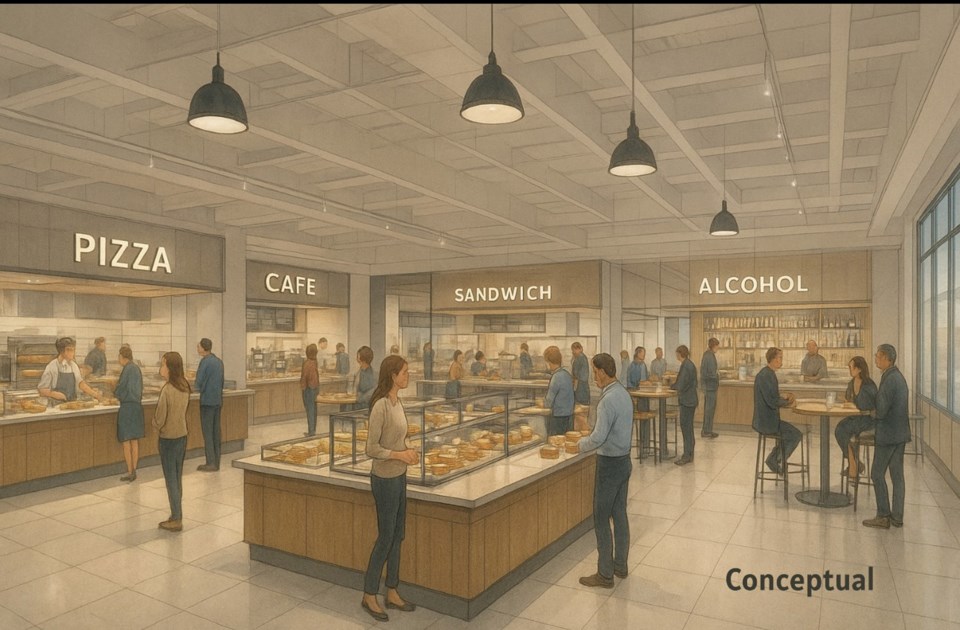
The Village Inn story reflects that larger shift. The building, which dates back generations in downtown Bradford, is now being discussed as a potential community-oriented redevelopment opportunity rather than simply another teardown.
That matters.
Because once a town loses all of its original character, it becomes interchangeable.
“What makes communities memorable isn’t perfection,” Shannon says. “It’s the stories attached to them. It’s the places people still talk about 30 years later.”
That’s also why Bradford continues to hold emotional value for so many people who grew up in York Region and Simcoe County.
It represents transition.
Not quite city.
Not quite rural.
Not frozen in time either.
Just evolving.
The Bradford Many People Remember
People who grew up in the 80s and 90s remember Bradford differently than newer residents know it today.
They remember:
- Holland Street before major expansion
- Long-standing family businesses
- The older downtown feel
- Simpler housing markets
- Farmland surrounding much of the community
- A town where “everyone knew everyone”
- Friday night rituals and local staples
- Places that became part of collective memory
And while growth changes communities, nostalgia is not necessarily resistance to change.
Sometimes it’s just recognition that places mattered.
“I think people want growth,” Shannon says. “But they also want soul. They want communities to still feel human.”
That balance is becoming one of the defining conversations across communities north of the GTA.
Why Bradford Still Makes Sense Today
From a real estate perspective, Bradford continues to attract attention for practical reasons too:
- Relative value compared to parts of the GTA
- Commuter accessibility
- Larger housing stock options
- Family-oriented neighbourhoods
- Continued infrastructure investment
- Strategic positioning between major regions
- Access to both urban amenities and outdoor lifestyle
For buyers who feel squeezed out of Toronto pricing but still need connectivity, Bradford often becomes part of the conversation.
And for many people who grew up nearby?
There’s another layer.
Familiarity.
Memory.
Connection.
“You can’t really put a price on what it feels like to return somewhere that shaped part of your life,” Shannon says. “Even if it’s changed.”
Sometimes especially then.
Thinking about moving north, relocating within Simcoe County, or understanding how communities like Bradford are evolving?
At the MovingSimcoe.com Team, we help clients navigate residential and commercial real estate across Simcoe County with clarity, context, and strategy.
Because good real estate decisions are not just about square footage.
They’re about understanding where a community has been, where it’s going, and whether it still feels like somewhere you can see yourself belonging.
Inspired by a Barrie Today article discussing the future potential and redevelopment vision for Bradford’s iconic Village Inn.