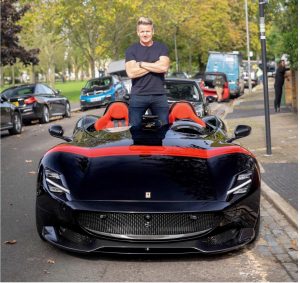
Gordon Ramsay’s $2 Million Ferrari and the Cost of Ownership
You see luxury cars like this regularly in Toronto. In that context, they make sense. Climate-controlled garages. Short, controlled city drives. A place built as much for display as for storage.
Bring a car like this into Simcoe County and the conversation changes.
This is, by design, a seasonal vehicle. Even in summer, its use would be limited. Between winter conditions, shoulder seasons, road wear, and storage realities, a car like this would likely spend far more time parked than driven.
Ownership here looks different than it does downtown. Perhaps it comes out on perfect days. Perhaps it makes the occasional trip north. But practically speaking, the ratio of use to cost shifts quickly.
Depreciating assets and false comparisons
We are often taught to avoid depreciating assets. To view them as poor financial decisions by default. But that framing only holds if we expect every major purchase to behave like an investment.
A car like this is not attempting to perform like real estate. It is not meant to generate yield or appreciate over time. It exists for experience, rarity, and personal choice.
Calling it a “bad investment” misunderstands its purpose.
Context matters more than the price tag
Chef Gordon Ramsay is known for precision and excess executed with intention. The Ferrari Monza SP2 fits that same mindset. Purposeful. Extreme. Uncompromising.
The decision is not about whether the asset depreciates. That outcome is already understood. The decision is whether the owner values the experience enough to accept that trade-off.
For most people, that equation does not work. For someone with substantial surplus capital, diversified assets, and no dependency on resale value, it can.
Why this belongs in a housing conversation
This distinction is the same one that applies to housing decisions.
Primary residences are rarely pure investments. They are lifestyle anchors, stability choices, and long-term cost structures. The mistake is not buying something that depreciates. The mistake is confusing purpose.
Problems arise when people expect experiential purchases to behave like appreciating assets, or when lifestyle decisions are made without regard for income structure, climate, geography, and use.
Value is not universal. It is contextual.
In Toronto, a car like this aligns with infrastructure, climate control, and density. In Simcoe County, the same purchase carries a very different cost-to-use reality.
That doesn’t make it wrong. It makes it specific.

Related reading on MovingSimcoe.com