Ontario: Tenants evicted as owner says family will live in whole building
Stories like this raise important questions about tenant protections and how Ontario’s rental housing rules are being interpreted and applied in practice.
According to Ontario’s Residential Tenancies Act (RTA), a landlord may issue an N12 notice to end a tenancy if the landlord, an immediate family member, or a caregiver intends to move into the rental unit for personal use. However, this provision comes with strict limitations and conditions.
One of the most commonly misunderstood aspects of the N12 process is that it is generally intended for individual rental units, not entire multi-unit residential buildings. In buildings with more than three units, an N12 is typically not applicable to displace all tenants, as the law does not allow a landlord to reclaim multiple units under a single “family use” claim.
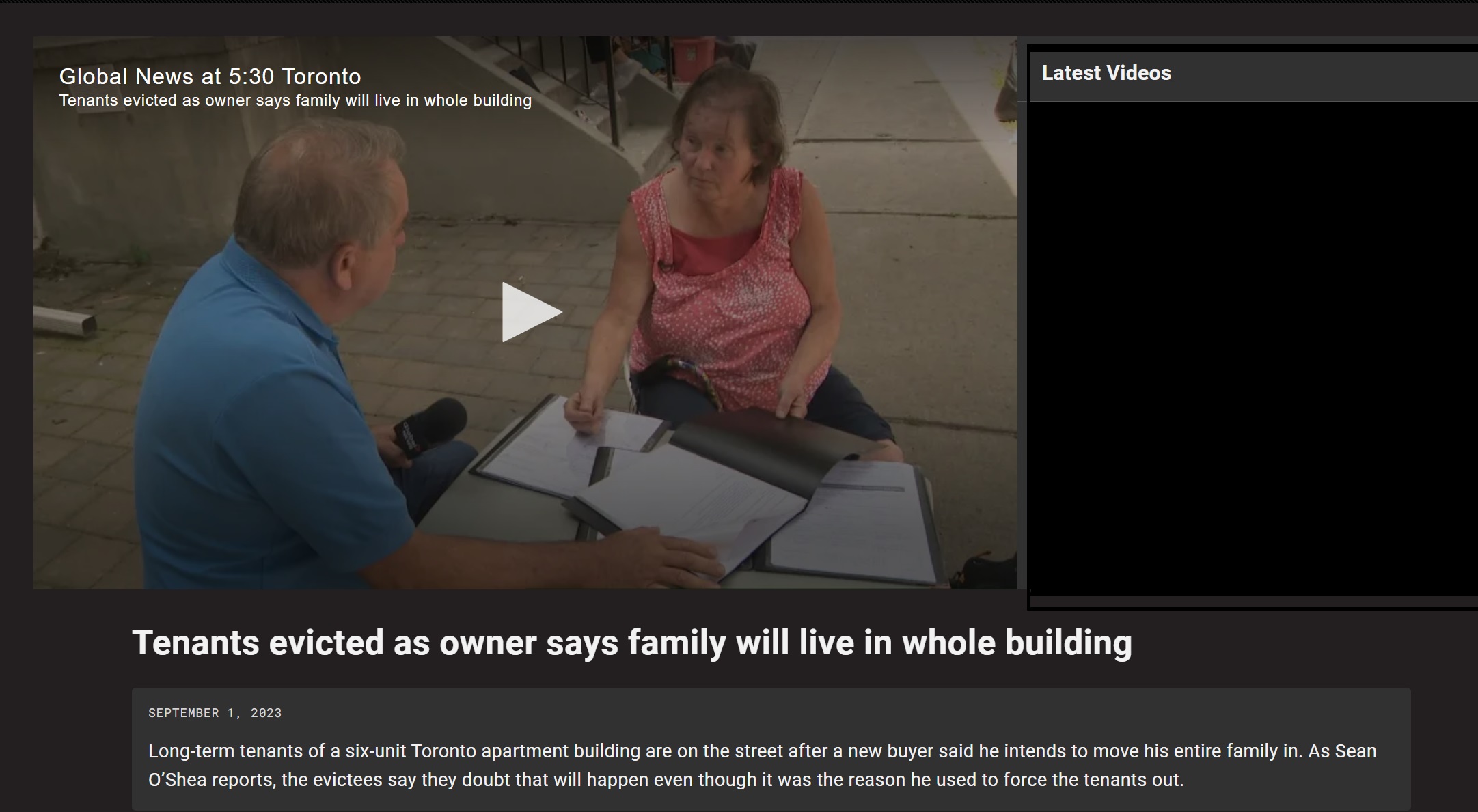
In this case, long-term tenants of a six-unit Toronto apartment building were forced to vacate after a new owner stated that his entire family intended to live in the whole building. This has raised concerns among tenant advocates and housing experts, who question how such an eviction could proceed when Ontario’s Landlord and Tenant Board (LTB) guidelines suggest that family-use evictions do not apply in this manner.
Ontario rental law is designed to balance the rights of property owners with the stability and security of tenants. For tenants, this means protection from eviction unless strict legal requirements are met. For landlords, it means navigating a highly regulated system where notices, timelines, and intent are closely scrutinised.
Cases like this highlight the growing tension in Ontario’s rental market, particularly in urban centres where housing supply is tight, prices are rising, and both buyers and tenants are under pressure. They also underscore the importance of understanding the difference between what is claimed in an eviction notice and what is ultimately permitted under the law.
For tenants, it is critical to know that receiving an N12 notice does not automatically mean eviction is lawful. Tenants have the right to challenge notices at the Landlord and Tenant Board, request proof of intent, and seek remedies if an eviction is later found to be made in bad faith.
For buyers and investors, this situation serves as a reminder that purchasing rental properties in Ontario comes with significant legal responsibilities. Assumptions about vacant possession, family use, or redevelopment should always be reviewed carefully with qualified legal and real estate professionals before closing.
As Ontario continues to grapple with housing affordability, supply constraints, and tenant protections, situations like this are likely to draw increased scrutiny and may influence future policy discussions around rental housing enforcement and reform.
Not sure how this is possible when Ontario’s Rental Housing Tribunal has consistently stated that an N12 notice is not applicable to buildings with more than three units: long-term tenants of a six-unit Toronto apartment building are now without housing after a new buyer said he intends to move his entire family into the property.
Click on the image below to view the Global News video article and interview.
With decades of experience working with investors, we guide clients toward strategic, compliant, long-term real estate investing.
Our team brings decades of investor-level experience, helping clients move into real estate investing with clarity, structure, and strategy. Connect with us