Barrie Baycats Downtown? Why a Move to Queen’s Park Could Bring More People, Energy and Opportunity Into the City Core
A potential Barrie Baycats move to Queen’s Park is more than a baseball conversation.
It is a downtown conversation.
It is about access, local business, family-friendly entertainment, public space, tourism, safety, parking, walkability and whether Barrie is willing to use major community assets to bring more people into the city core for the right reasons.
The Baycats already have a strong history and a loyal fan base. Their current home at Athletic Kulture Stadium in Midhurst offers space, sight lines and easy access for many people who drive in from Barrie, Springwater, Innisfil, Wasaga Beach, Collingwood, Stayner and surrounding communities.
That should not be dismissed.
But the idea of bringing the team into downtown Barrie opens a bigger question: what happens when a successful local sports franchise becomes part of the downtown experience instead of sitting outside the city centre?
The answer could be significant.
A Downtown Stadium Would Change the Game Day Experience
At the current Midhurst location, the Baycats offer a traditional ballpark experience. Fans drive in, watch the game and drive home. It works well for many long-time supporters.
A downtown ballpark would create a different kind of experience.
Fans could attend a game, walk to dinner, grab a drink after, meet friends nearby, bring kids to the waterfront before first pitch, or make the game part of a larger evening downtown.
That changes baseball from a single-destination outing into a downtown event.
For Barrie, that kind of activity has value. More people downtown means more foot traffic, more restaurant visits, more patio activity, more exposure for local shops, more reason to stay after work, and more opportunities for residents to see the core as somewhere to gather, not just somewhere to pass through.
Why Queen’s Park Is an Interesting Location
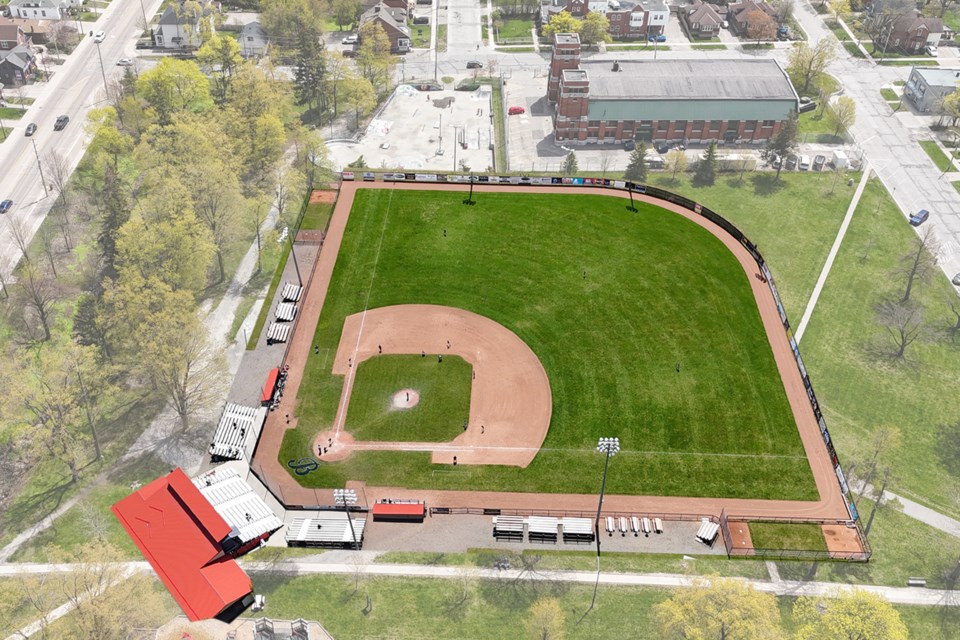
Queen’s Park sits in a location that could connect baseball to several important parts of Barrie life.
It is close to restaurants, bars, the waterfront, parking, transit, residential areas, downtown businesses and existing public amenities. The park already includes recreational uses such as tennis courts, a skateboard park, a playground, a ball field and washrooms.
A well-planned stadium could give the area more consistent activity and public use.
That is the key.
Public spaces tend to feel better used, safer and more connected when they attract a range of people at different times of day. A downtown Baycats facility could help bring families, seniors, young adults, sports fans, visitors and local residents into the area on game days.
It would not solve every downtown challenge, and nobody serious should pretend it would. But good public programming can shift how spaces are used.
A ballpark does not just create seats. It creates patterns.
Transit Access Could Bring In New Fans
One of the strongest arguments for a downtown move is transit.
The current Midhurst stadium is not easy to access without a vehicle. That limits who can attend. Students, young people, seniors, people without cars, downtown residents and lower-income families may face barriers before they even consider buying a ticket.
A Queen’s Park location could make Baycats games more accessible to people who rely on public transit, walk, bike, take rideshare or live nearby.
That opens the door to a larger and more diverse fan base.
It also makes the team more visible. A downtown stadium would put the Baycats closer to daily life in Barrie. People who may not currently think about attending a game could become casual fans because the venue is nearby, visible and easy to include in an evening out.
That is how sports culture grows.
Affordable Entertainment Has Real Value
Local baseball offers something cities need more of: affordable entertainment.
A Baycats game can give families several hours of live sport without the price tag of major league events, arena concerts or expensive attractions. That matters in a city where many households are watching costs more carefully.
Affordable events help people participate in community life.
They give families something to do. They give kids exposure to sport. They give residents a reason to support local athletes and local businesses. They create shared memories that do not require a luxury budget.
A downtown location could make that value even stronger by connecting the game to other low-cost or flexible activities nearby.
For example, a family could visit the waterfront, grab an affordable meal, watch the game and head home without a long drive out of town. A group of friends could meet downtown after work and walk over. A grandparent could take a child to a game without making it a full travel production.
That kind of convenience increases attendance potential.
The Local Business Opportunity
A downtown Baycats stadium could create a stronger connection between sport and the local economy.
Restaurants, cafes, pubs, shops, parking providers, hotels and service businesses could all benefit from increased traffic on game days. Even modest increases in regular evening activity can help downtown businesses, especially in warmer months when patios and walkable streets are already part of the appeal.
This is not only about baseball fans buying food before or after a game.
It is about creating reasons for people to come downtown more often.
When people have a good experience, they come back. They notice businesses they had not tried. They bring friends. They start treating downtown as part of their routine.
A stadium can become an anchor if it is connected properly to the surrounding area.
The opportunity is not just to relocate a team. The opportunity is to create a better downtown loop: dinner, game, waterfront, local business, repeat.
What About Fans Who Prefer Midhurst?
Some fans will prefer the current stadium. That is fair.
Midhurst offers easy driving access, familiar routines, open space and a ballpark experience people already know. Fans from communities outside Barrie may worry that a downtown move creates parking headaches, traffic, safety concerns or extra inconvenience.
Those concerns should be taken seriously.
A successful move would need more than enthusiasm. It would need a practical plan for parking, traffic flow, pedestrian access, lighting, washrooms, security, accessibility, concessions, nearby business coordination and a respectful transition for current fans.
Long-time supporters should not be treated like obstacles to progress. They are part of why the team has value in the first place.
The strongest case for Queen’s Park is not that Midhurst is wrong.
It is that downtown Barrie may offer a larger community opportunity if the move is planned properly.
Parking Needs a Clear Answer
Parking will be one of the biggest public concerns.
Any downtown stadium proposal needs to clearly explain where people will park, how many spaces are realistically available, how traffic will move before and after games, and how the city will manage overlap with restaurants, waterfront activity, events and residents.
A vague answer will not be enough.
The public will need to understand whether existing parking can handle a 2,500-fan capacity, how far people may need to walk, whether accessible parking is sufficient, how families will manage drop-offs, and whether transit service can support game times.
The city also needs to be honest that downtown parking feels different than suburban or rural parking. Even when spaces exist, perception can shape behaviour.
If people believe parking will be frustrating, some will avoid coming.
A smart plan would make the trip feel simple before the first game is ever played.
Safety Has to Be Addressed Directly
A Queen’s Park proposal cannot ignore safety concerns.
Downtown Barrie has faced visible challenges related to homelessness, addiction, open drug use and public disorder. Residents and families will ask whether they feel comfortable bringing children to evening games in that area.
That is not a small issue.
It also should not become an excuse to write off downtown.
Public spaces improve when they are actively used, well-lit, maintained, programmed and supported by thoughtful services and appropriate enforcement. A stadium could bring more positive activity into the area, but only if the city treats safety as part of the planning, not as a public relations problem.
That means clear lighting, visible staff, clean washrooms, safe walking routes, coordinated security, nearby outreach supports, and a plan that respects both public safety and the humanity of people experiencing homelessness or addiction.
A downtown ballpark should not displace difficult issues. It should be part of a broader strategy to make public space work better for everyone.
Queen’s Park Should Still Feel Like a Public Park
A stadium proposal also needs to respect the existing public uses at Queen’s Park.
The tennis courts, skateboard park, playground, washrooms and open space are already part of the neighbourhood. People use them. They should not be treated as afterthoughts.
A well-designed facility would need to improve the park, not simply take it over.
That means maintaining public access, protecting existing amenities where possible, improving lighting and walkability, and making sure the park does not become useful only on game days.
The best version of this idea would create a more active Queen’s Park all season, not a fenced-off facility that sits quiet most of the time.
What This Could Mean for Downtown Real Estate
A downtown Baycats stadium could influence how people experience and value the surrounding area.
Sports facilities, when done well, can support nearby restaurants, rental demand, short-term visits, commercial interest and neighbourhood identity. They can also make downtown living more appealing for people who want walkable entertainment and community events close by.
This does not mean property values automatically rise because a stadium is built.
Real estate responds to execution.
If the facility is attractive, safe, active, well-managed and connected to the downtown, it could strengthen the area’s appeal. If parking, safety, noise or design are mishandled, nearby residents and businesses may feel the downside more than the benefit.
For investors and property owners, the question is not simply whether the Baycats move downtown.
The better question is whether the move becomes part of a larger downtown improvement strategy.
What This Could Mean for Barrie’s Identity
Barrie is growing, but it is still deciding what kind of city it wants to be.
A strong downtown needs more than buildings. It needs reasons for people to gather. It needs public life. It needs evening activity that is not only nightlife. It needs family-friendly reasons to come downtown. It needs anchors that bring residents together across age, income and neighbourhood.
A downtown baseball stadium could help with that.
It could give Barrie a more visible sports culture in the city core. It could connect local pride to local business. It could make the Baycats more accessible to residents who currently do not attend. It could bring visitors into downtown instead of keeping game-day activity outside the city.
The team already has the history.
A Queen’s Park location could give that history more visibility.
 The Best Version of This Idea
The best version of a downtown Baycats move would not be a stadium dropped into a park with a press release and a parking map.
It would be a carefully planned public asset.
That means:
- Protecting existing Queen’s Park amenities where possible
- Creating safe and clear walking routes
- Coordinating with downtown restaurants and businesses
- Making transit access part of the game-day plan
- Designing parking and traffic flow before problems begin
- Supporting families, seniors and fans with accessibility needs
- Keeping the park useful outside game days
- Addressing safety concerns honestly
- Creating affordable community programming
- Using the stadium to strengthen downtown, not isolate it
That is the difference between building a ballpark and building a community asset.
The Bottom Line
A possible Baycats move to Queen’s Park is not only about whether fans prefer Midhurst or downtown.
It is about what Barrie wants from its downtown.
The current stadium works for many people. It has history, space and loyal supporters. But a downtown location could open the team to more residents, more transit users, more families, more casual fans and more connection with local businesses.
There are real concerns around parking, safety, access and the future of Queen’s Park. Those need serious answers, not slogans.
But there is also a real opportunity.
A downtown Baycats stadium could bring more people into the core for affordable entertainment, support local restaurants and businesses, create a stronger community gathering place, and help people see downtown Barrie as active, welcoming and worth spending time in.
For a growing city, that is the bigger picture.
The question is not just where the Baycats play.
The question is what kind of downtown Barrie is trying to build.